Rosemary oil is one of the most searched hair care ingredients in Sri Lanka right now. Social media often sells it as a miracle for hair fall and thin hair. The truth is more useful than the hype: rosemary oil may help some people, it needs to be used correctly and patiently, and it is not right for everyone. This guide explains what the research actually shows, how to use rosemary oil and rosemary water safely, and what to check before you buy it in Sri Lanka.
The short answer
Rosemary oil may support hair growth, but the evidence is still limited. The best-known human study compared rosemary oil with 2% minoxidil in 100 people with pattern hair loss. Neither group saw a change in hair count after 3 months. After 6 months, both groups had more hair than at the start, and the difference between the two groups was not significant. That is encouraging, but it is one small study. Rosemary oil must always be diluted, it takes months of regular use, and it will not work for every cause of hair fall.

What is rosemary oil?
Rosemary (Rosmarinus officinalis, now also classified as Salvia rosmarinus) is a fragrant herb from the Mediterranean. When people say "rosemary oil for hair", they can mean four quite different things:
- Rosemary essential oil: a concentrated oil distilled from the leaves. It is strong and must never go on the scalp undiluted.
- Rosemary-infused oil: rosemary leaves soaked in a carrier oil such as coconut or olive oil. It is much milder.
- Rosemary water: rosemary simmered in water and used as a spray or rinse.
- Ready-made hair oils: blends where rosemary is one ingredient among several, already diluted and ready to apply.
Knowing which one you are buying matters, because the strength, the price and the way you use each one are completely different.
Does rosemary oil really help hair growth? What the research says
The human study everyone quotes
In 2015, researchers published a randomised trial in the journal Skinmed. One hundred people with androgenetic alopecia (pattern hair loss) used either rosemary oil or 2% minoxidil for 6 months, with check-ups every 3 months.
- At 3 months, neither group showed a significant change in hair count.
- At 6 months, both groups had a significant increase in hair count compared with the start.
- There was no significant difference in hair count between the rosemary group and the minoxidil group.
- Scalp itching increased in both groups, and it was more frequent in the minoxidil group.
This is the main reason rosemary oil became popular. It is a real study, but it is small, it looked only at pattern hair loss, and it has not been repeated on a large scale.
Laboratory and animal research
A 2013 study in Phytotherapy Research applied rosemary leaf extract to the skin of mice and found that it improved hair regrowth. In laboratory tests, the extract also blocked 5-alpha-reductase, an enzyme linked to pattern hair loss. Results in mice and test tubes are a reason to keep researching, but they do not prove the same effect in people.
What this means for you
- Be patient. In the human study nothing changed at 3 months. Think in months, not weeks.
- The cause of hair fall matters. Hair fall from thyroid problems, low iron, a recent illness, stress or childbirth needs the cause treated. If you are losing a lot of hair suddenly, see a doctor. Our guides on stopping hair fall naturally and postpartum hair fall explain the common causes.
- It may not work for everyone. Treat rosemary oil as one part of a healthy hair routine, not a guaranteed cure.
How to use rosemary oil for hair, step by step
If you are using pure rosemary essential oil, follow these steps:
- Choose a carrier oil. Coconut oil and gingelly (sesame) oil are easy to find in every Sri Lankan home. Jojoba oil also works.
- Dilute it. Mix a few drops of rosemary essential oil into about a tablespoon of carrier oil. Never apply essential oil straight onto your scalp.
- Do a patch test. Rub a little of the mix onto a small area of your scalp first. Leave it for a day and watch for redness, itching or burning. This is especially important if you have sensitive skin or eczema.
- Massage it in. Part your hair and massage the oil into your scalp with your fingertips for about 3 minutes.
- Leave it on. Keep it on for a few hours, or overnight and wash it out in the morning.
- Wash with a mild shampoo. A gentle shampoo is enough. If you prefer a herbal wash, read our guide to shikakai powder.
How often? Two or three times a week is a sensible routine. Cleveland Clinic's dermatologists say you may need about six months of regular use to see a meaningful difference. Using more oil, or using it more often, does not speed things up and can irritate your scalp.
Adding it to shampoo: some people add rosemary essential oil to their shampoo instead. Keep it to no more than five drops for every 30 ml (about one ounce) of shampoo.
Rosemary water for hair: is it better than oil?
Rosemary water has become popular because it feels lighter than oil and does not need to be washed out. To make it at home:
- Simmer a handful of fresh rosemary sprigs in about two cups of water for 15 to 20 minutes.
- Let it cool completely, then strain out the leaves.
- Pour it into a clean spray bottle and mist it onto your scalp after washing, or use it as a final rinse.
Make small batches, keep it in the fridge and throw it away after a few days or if it smells off. Rosemary water is gentle, but there is very little research on it. The study above used rosemary oil, not rosemary water, so do not expect the same results.
Rosemary essential oil, rosemary water or a ready-made hair oil?
| Rosemary essential oil | Rosemary water | Ready-made herbal hair oil | |
|---|---|---|---|
| What it is | Concentrated oil from the leaves | Rosemary simmered in water | Rosemary blended with other herbs and oils |
| Needs mixing? | Yes, always dilute it | You make it yourself | No, ready to apply |
| Irritation risk | Highest if not diluted | Low | Low when the blend is well made |
| Keeps for | A long time if sealed | A few days in the fridge | Check the label |
| Best for | People happy to measure and mix | A light, oil-free routine | People who want a simple oiling routine |
Who should be careful with rosemary oil
- Pregnant or breastfeeding women: Cleveland Clinic says rosemary oil is not recommended during pregnancy or breastfeeding.
- Children: children's skin can be more sensitive to essential oils. Speak to a doctor first.
- Sensitive skin, eczema or scalp conditions: always patch test, and stop if your scalp becomes red, itchy or starts to burn.
- Eyes and mouth: keep rosemary oil away from both.
- Long-term medical conditions: if you have a medical condition or take regular medicine, ask your doctor before using essential oils.
If you get any irritation, stop using it and see a dermatologist. Cleveland Clinic also notes that added fragrances can raise the risk of irritation, so plain products are the safer choice.
Buying rosemary oil in Sri Lanka: what to check
Rosemary oil is now sold everywhere online in Sri Lanka, from tiny bottles of essential oil to imported hair blends. Before you pay, check these points:
- What exactly is in the bottle? The label should say clearly whether it is pure essential oil, an infused oil or a blend.
- The botanical name. Look for Rosmarinus officinalis (or Salvia rosmarinus) on the label.
- A full ingredient list. Avoid products that hide behind "special formula" or "fragrance" without listing what is inside.
- Packaging. Essential oils should come in sealed, dark glass bottles that protect them from light.
- Price per use, not price per bottle. Essential oil is used a few drops at a time, while a ready-made hair oil is used more generously. Compare how long each bottle will last you.
- Honest claims. Be wary of promises like "regrow hair in two weeks" or "100% guaranteed results". No hair product can honestly promise that.
- A seller you can contact. Buy from a seller with real reviews and a working phone number or WhatsApp.
For a wider comparison of what is available, read our natural hair oil buying guide for Sri Lanka.
Rosemary and Sri Lankan hair oiling traditions
Rosemary is not a traditional Sri Lankan herb, but it fits naturally into the oiling routine many of us grew up with. Sri Lankan families have oiled their hair with coconut oil and gingelly oil for generations, often with herbs such as Bhringaraj (Keekirindiya), amla, curry leaves and hibiscus. Rosemary can join that routine as one more herb, rather than replacing it. If you want to learn about the herb Ayurveda calls the "King of Hair", read our guide to Bhringraj oil benefits.
Where SidBoga Bhringaraj Hair Oil fits in
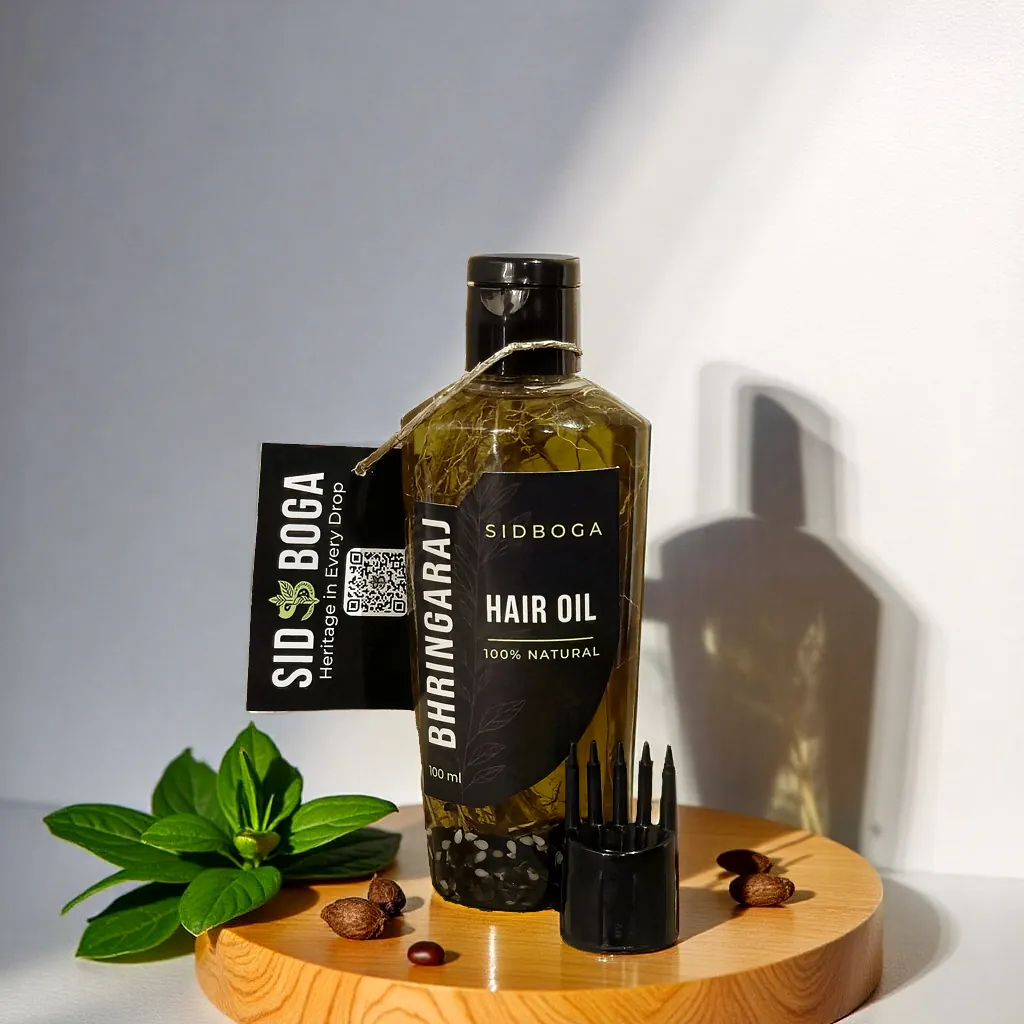
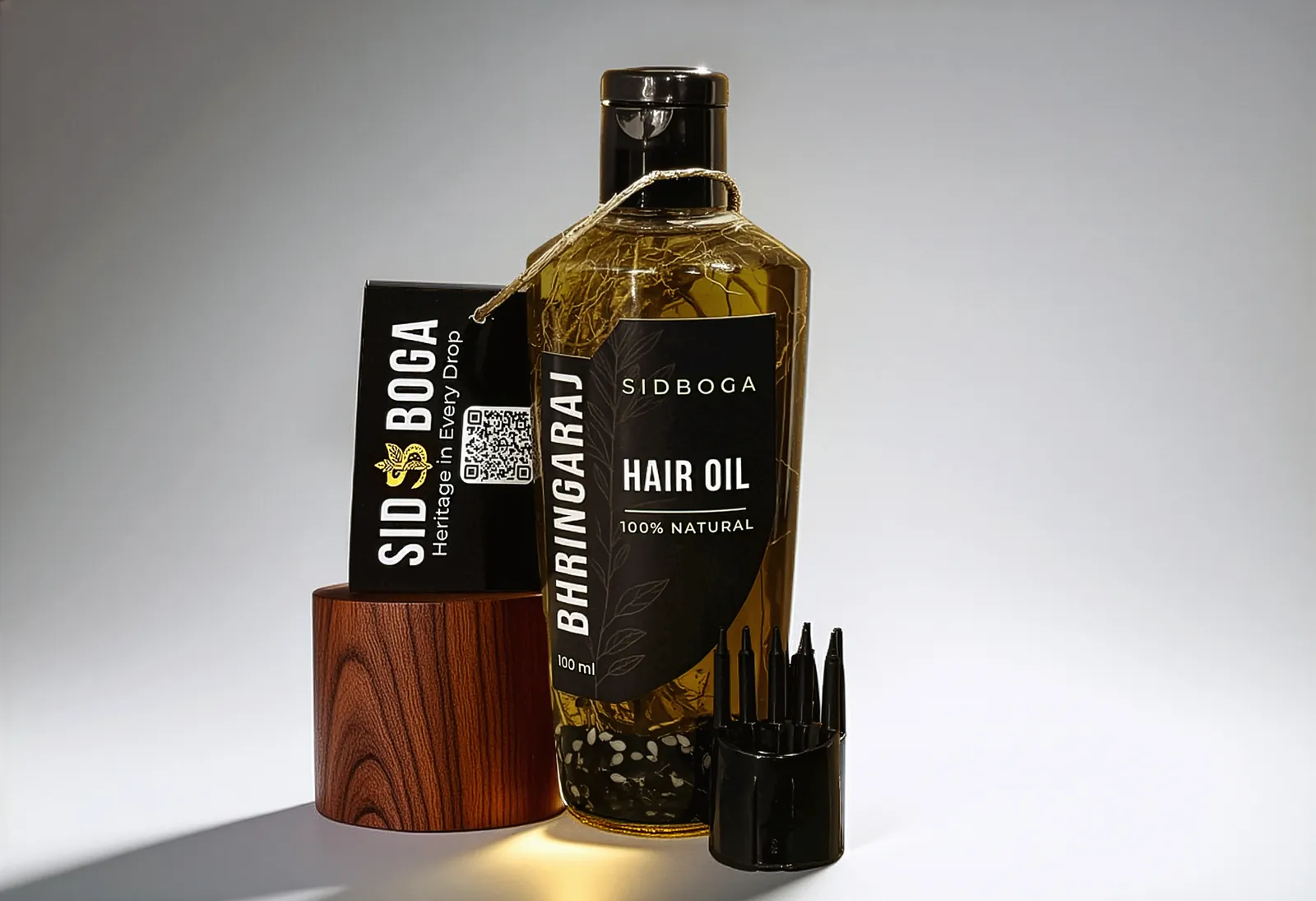
If you would rather not measure and mix essential oils yourself, a ready-made herbal oil is the simpler option. SidBoga Bhringaraj Hair Oil is made in Sri Lanka from 21 natural ingredients, and rosemary is one of them. It sits alongside Bhringaraj (Eclipta alba), amla, curry leaves, aloe vera, onion, hibiscus, brahmi, neem and other herbs, in a base of coconut, gingelly and castor oils.
- It helps reduce hair fall, supports healthy hair growth, soothes an itchy scalp, helps strengthen roots and adds shine.
- It is ready to use, with no mixing, and comes with a comb applicator that puts the oil straight onto your scalp.
- How to use it: 2 to 3 times a week, apply with the comb applicator, massage your scalp for about 3 minutes, leave it on for at least 1 hour (overnight is best) and wash with a mild shampoo.
- Price: LKR 1,500 for 100 ml, with free island-wide delivery and cash on delivery. You can also order on WhatsApp at 075 777 7597.
The same honesty applies here as with rosemary oil: hair responds slowly, results vary from person to person, and regular use over several months matters more than any single ingredient.
Frequently asked questions
How long does rosemary oil take to work for hair?
Months, not weeks. In the main human study, there was no change in hair count at 3 months, and the improvement was measured at 6 months. Cleveland Clinic suggests using it two or three times a week for about six months before judging the result.
Can I leave rosemary oil in my hair overnight?
Yes, as long as it is diluted in a carrier oil and you have done a patch test. Many people apply it at night and wash it out in the morning. If your scalp is sensitive, start with a few hours instead.
Can I use rosemary oil every day?
Most people do well with two or three times a week. Using too much, or using it too often, can irritate the scalp, and more oil does not mean faster growth.
Does rosemary oil help with grey hair?
There is no reliable evidence that rosemary oil reverses grey hair. Be careful of products that promise it.
Is rosemary oil good for dandruff?
There is not enough research to call rosemary oil a dandruff treatment. Heavy oiling can even make some types of dandruff worse. If dandruff is your main problem, read our guide on getting rid of dandruff naturally.
Rosemary oil or Bhringaraj oil: which is better?
They are different herbs, and you do not have to choose. Bhringaraj has a long history in Ayurvedic hair care, while rosemary is better known from recent research. A blended oil gives you both in one simple routine.
Can men and women both use rosemary oil?
Yes. The same safety rules apply to everyone: dilute it, patch test it, and avoid it during pregnancy and breastfeeding.
The bottom line
Rosemary oil is worth its popularity, but not its hype. A small human study suggests it may help pattern hair loss over about six months, and lab research gives a possible reason why. To give it a fair chance, dilute it, patch test it, use it two or three times a week and be patient. If you prefer a simple routine, choose a well-made herbal oil that already includes rosemary. And if your hair fall is sudden or heavy, see a doctor first, because no oil can fix a problem that starts inside the body.
This article is general information, not medical advice. Talk to a doctor or dermatologist about hair loss, especially if it is sudden, patchy or comes with other symptoms.
Sources
- Panahi Y, et al. Rosemary oil vs minoxidil 2% for the treatment of androgenetic alopecia: a randomized comparative trial. Skinmed. 2015;13(1):15-21.
- Murata K, et al. Promotion of hair growth by Rosmarinus officinalis leaf extract. Phytotherapy Research. 2013;27(2):212-7.
- Cleveland Clinic. Rosemary oil for hair growth.
- Medical News Today. Rosemary oil for hair growth.